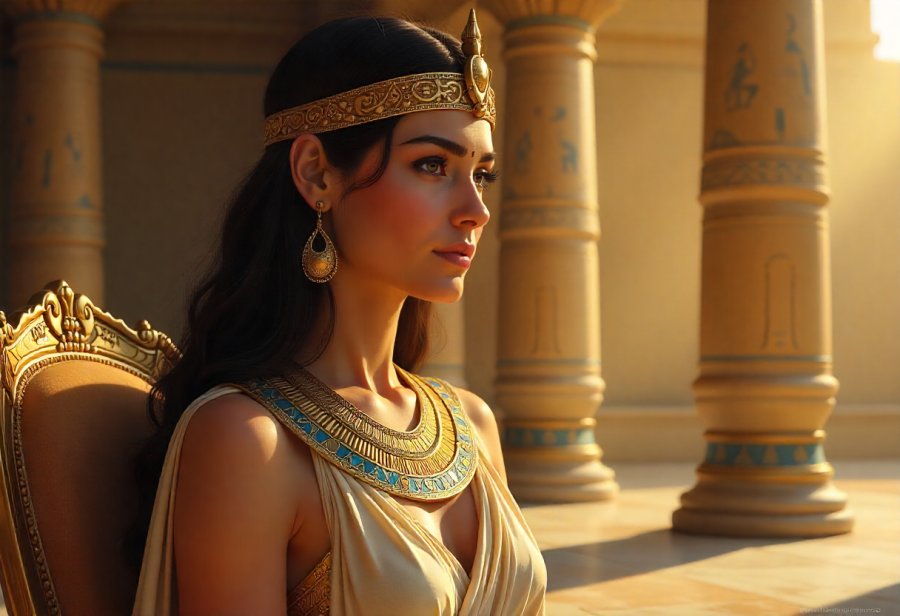
Cleopatra’s True Power: Intelligence, Diplomacy, and Cultural Mastery
What if Cleopatra’s true legacy was never her famed beauty or romantic liaisons, but her formidable intellect and strategic mastery? This reimagining challenges Hollywood’s glamourized image, revealing a ruler whose power stemmed from multilingual diplomacy, cultural patronage, and political resilience. Cleopatra navigated a turbulent world—balancing Greek traditions with Egyptian identity—using wit, negotiation, and vision to forge alliances with Rome’s greatest leaders. Her support of arts and sciences, along with her intelligence, enabled her to sustain Egypt’s independence amid overwhelming odds. Today’s scholarship increasingly uncovers her as a shrewd diplomat and cultural innovator, pushing us to look beyond myth and surface allure to appreciate her true strength: a mind resilient and adaptable enough to shape history. Could her legacy be a testament to the power of knowledge and resilience? This perspective shifts her from mythic seductress to an inspiring example of leadership rooted in wisdom, whose influence endures through the ages.
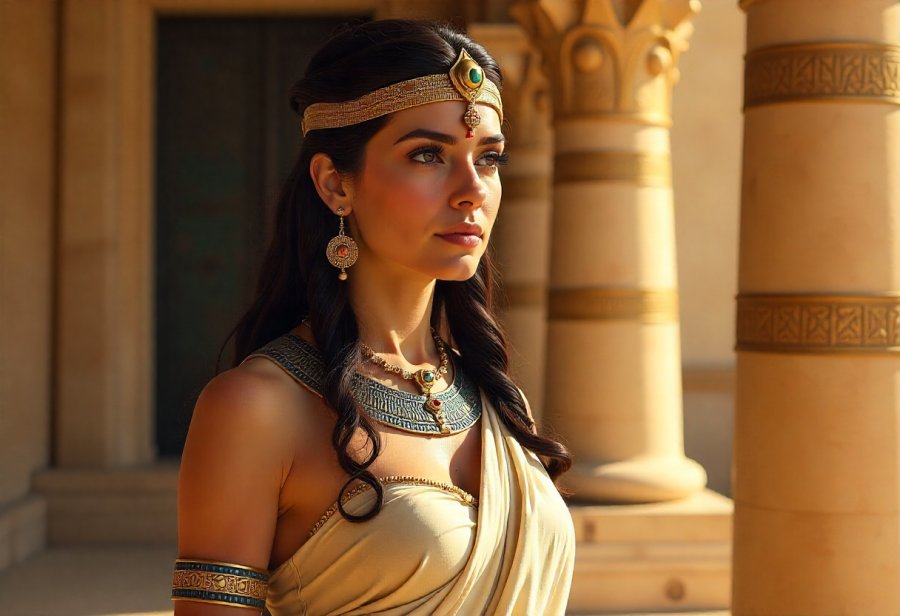
Unveiling Cleopatra’s True Power: Mind Over Glamour
Cleopatra VII is often remembered through Hollywood’s glamorous lens as a seductive queen whose beauty and charm helped shape her legend. But beneath that iconic image lies a far more complex story—one rooted in sharp intelligence, strategic thinking, and political skill. Her true power wasn’t simply about allure; it was in her ability to navigate a turbulent world filled with shifting alliances, internal unrest, and external threats. Cleopatra’s mastery of diplomacy, scholarship, and leadership made her a formidable ruler whose influence extended well beyond superficial appearances.
Her legacy prompts a vital question: was Cleopatra’s greatest strength her physical beauty, or was it her mind? Evidence suggests the latter. She was fluent in multiple languages—Egyptian, Greek, Latin—which enabled her to communicate directly with a diverse range of allies and rivals. Her education was rigorous, covering philosophy, sciences, and political strategy. This intellectual foundation gave her a distinct advantage, especially in a world where influence often depended on knowledge and negotiation rather than brute force.
Throughout her reign, Cleopatra demonstrated remarkable adaptability and strategic insight. She forged alliances with Rome’s most powerful figures—Julius Caesar and Mark Antony—not out of vanity, but as calculated moves to secure Egypt’s independence. Her marriages, negotiations, and diplomatic efforts were all carefully crafted to serve her kingdom’s interests, revealing a leader who understood that influence could be more effective than mere military might. Her ability to shift tactics and build alliances underscored her sharp mind and political acumen.
Beyond politics, Cleopatra’s patronage of learning and culture was another pillar of her leadership. She supported the Library of Alexandria and surrounded herself with scholars and scientists, fostering an environment of inquiry and innovation. Her own scholarly pursuits and multilingual abilities showcased her belief in knowledge as a key tool of leadership. This cultural engagement not only strengthened Egypt’s intellectual reputation but also reinforced her image as a ruler who combined wisdom with authority.
Her story challenges the common misconception that her influence was rooted solely in her beauty or romantic entanglements. Instead, her true strength lay in her resilience, intelligence, and capacity to lead through diplomacy and cultural patronage. She understood that leadership was about more than appearances—it was about strategic thinking, adaptability, and mastery of knowledge. Recognizing this shifts her from myth to a genuine figure of political and intellectual strength, whose legacy endures because of her mind as much as her reign.
From Macedonian Roots to Egyptian Throne: Cleopatra’s Origins and Rise
Cleopatra VII was born into the Ptolemaic dynasty, a Greek family that took control of Egypt after the collapse of Alexander the Great’s empire. Her ancestors, Macedonian Greeks who arrived in Egypt around 305 BCE, established a ruling lineage that blended Greek customs with native Egyptian traditions. Growing up in this multicultural environment, Cleopatra received a rigorous education, mastering multiple languages and studying philosophy, sciences, and politics. Her fluency in Egyptian, Greek, and Latin gave her a diplomatic edge, allowing her to communicate directly with diverse allies and rivals.
Her rise to power came amidst a period of political instability. When her father, Ptolemy XII, died in 51 BCE, Cleopatra was only about 18 years old. She inherited a kingdom riddled with internal unrest and external pressures, particularly as Rome’s influence in the Mediterranean expanded. The Ptolemaic rulers often faced threats from rival factions and external powers, forcing Cleopatra to be strategic from the very start of her reign.
To secure her throne, Cleopatra moved swiftly, consolidating her authority through marriages and alliances. She worked to stabilize Egypt’s fragile political situation while balancing the delicate demands of her Greek-Macedonian heritage and Egyptian religious traditions. Embracing the divine status of the pharaoh, she positioned herself as a living goddess, reinforcing her legitimacy. Simultaneously, she incorporated Greek political ideas, blending her Macedonian background with Egyptian iconography and religious authority.
Egypt’s unique cultural landscape required her to navigate multiple identities. She cultivated a reputation as both a traditional Egyptian ruler and a Hellenistic monarch, which helped her legitimize her authority across different communities. Her ability to balance these cultural influences was key to maintaining stability in a volatile environment. It also allowed her to appeal to a broad base of support within her diverse kingdom.
Cleopatra’s diplomatic skill extended beyond internal governance. Recognizing the rising power of Rome, she established strategic alliances with its leaders, Julius Caesar and later Mark Antony. These alliances were not driven by personal vanity but by a clear intent to preserve Egypt’s independence amid Rome’s imperial ambitions. Her marriages and negotiations were calculated moves crafted to serve Egypt’s interests, demonstrating her mastery of political strategy.
Her background, education, and cultural diplomacy shaped her into a leader capable of navigating one of the most turbulent eras in Egyptian history. Cleopatra understood that influence depended on intelligence, adaptability, and resilience. Her ability to forge alliances, support arts and sciences, and project divine authority made her a formidable figure whose legacy extended far beyond her time.
This historical foundation reveals Cleopatra not merely as a romantic or mythic figure but as a shrewd diplomat and resilient strategist. Her rise was driven by intellect and political acumen, qualities that allowed her to sustain her reign against formidable odds. Her story is a testament to the power of cultural intelligence and strategic thinking—traits that defined her leadership and continue to inspire today.
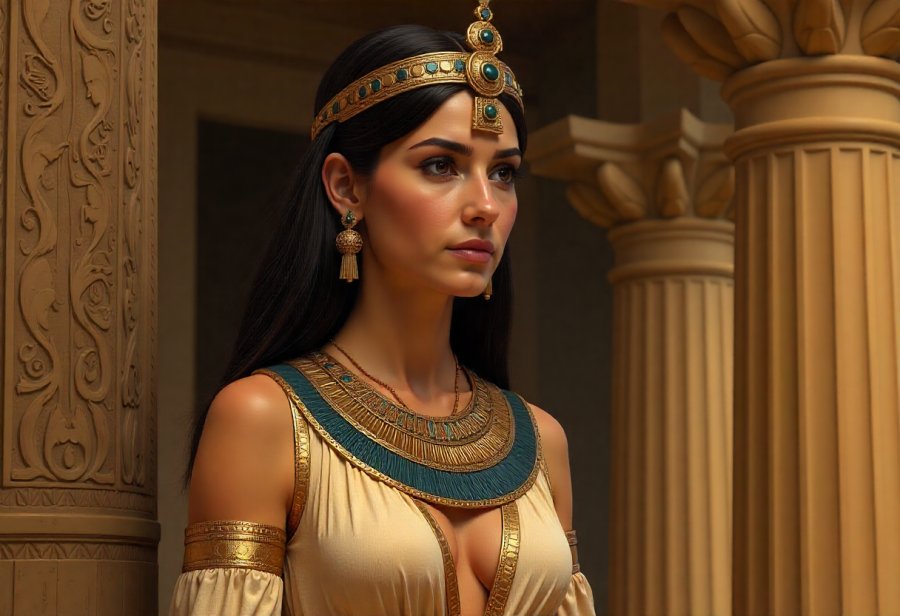
Modern Eyes on Cleopatra: Myth, Media, and Scholarship
Today, perceptions of Cleopatra are a blend of myth, media, and scholarly reevaluation. Hollywood’s portrayals often emphasize her beauty and romantic liaisons with Julius Caesar and Mark Antony, overshadowing her true qualities as a diplomatic and intellectual leader. This focus tends to reduce her influence to personal charm, missing the depth of her strategic thinking and cultural sophistication. As a result, many still see her as a symbol of seduction rather than a formidable stateswoman.
Recent scholarship, however, shifts the spotlight toward her diplomatic prowess, multilingual talents, and patronage of learning. Researchers now highlight her skill in forging alliances, negotiating with Rome’s leaders, and maintaining Egypt’s independence in a changing empire. These insights paint her as a resilient, intelligent ruler who understood influence came from wit, cultural diplomacy, and resilience—traits often absent from popular stories.
Despite these advances, gaps remain. Many ancient texts were written by outsiders or rivals, sometimes biased or incomplete, which complicates a full understanding of her leadership. Archaeological evidence is limited and open to interpretation, meaning our view continues to evolve. Cultural biases—both ancient and modern—still shape her story, often emphasizing her romantic image over her strategic brilliance.
The scholarly shift reflects a broader effort to appreciate Cleopatra’s achievements beyond personal stories. Today’s research emphasizes her diplomatic skill, her support for arts and sciences, and her multilingual abilities. These facets reveal a leader who valued knowledge as a tool for influence, demonstrating that her power was rooted in intelligence and adaptability. Recognizing her as a master strategist and cultural patron challenges outdated stereotypes and offers a richer, more accurate picture.
This evolving understanding encourages us to reconsider her role as a pioneering female leader. It highlights her resilience, cultural diplomacy, and strategic intelligence—traits that helped her navigate a turbulent era and leave a lasting legacy. Modern reinterpretations challenge the romanticized myth, emphasizing her as a woman who mastered influence through wisdom, resilience, and cultural understanding.
As new discoveries and scholarly debates emerge, our appreciation for Cleopatra deepens. Her leadership was defined less by superficial glamour and more by her ability to adapt, negotiate, and lead through intellect. Recognizing her true strengths enriches her story, inspiring contemporary leaders to see influence as rooted in resilience, knowledge, and strategic thinking—qualities that continue to resonate today.
Reassessing Cleopatra: Strategy, Diplomacy, and Cultural Leadership
To truly understand Cleopatra’s power, we need to look beyond the romanticized stories and focus on her strategic intelligence and leadership qualities. Reassessing her influence involves examining her diplomatic negotiations, her patronage of arts and sciences, and her ability to unify diverse cultural identities under her rule. Modern tools like archaeological discoveries and reinterpretations of ancient texts are shedding new light on her role as a shrewd diplomat and supporter of knowledge, revealing strengths often overshadowed by myths.
Challenging the old narratives means questioning the idea that her political significance was mainly based on personal charm or romantic affairs. Instead, engaging with recent scholarship that emphasizes her negotiations, alliances, and cultural patronage paints her as a leader who relied on wit and wisdom. Applying contemporary leadership ideas helps us appreciate her resilience and adaptability, especially during turbulent times. Her influence was rooted in her ability to think strategically and leverage cultural diplomacy, not just her appearance or personal relationships.
Technologies like digital reconstructions of Alexandria or virtual tours of her court offer immersive ways to explore her environment and decision-making process. These innovations help us visualize her world more vividly, making her strategic thinking more tangible. Combining evidence from artifacts, texts, and cultural analysis encourages a multidisciplinary approach that deepens our understanding of her as a master strategist and cultural patron. This broader perspective highlights her as a resilient leader who understood that influence stems from intelligence and adaptability.
Scholars agree that Cleopatra’s true strength was her ability to navigate complex political landscapes through intelligence and resilience. Her diplomatic skill turned threats into opportunities, and her multilingual talents and support for arts and sciences demonstrated her commitment to knowledge. Recognizing her as a master negotiator and cultural advocate shifts the focus from superficial myths to her genuine leadership qualities. Her capacity to adapt and maintain Egypt’s independence in a hostile era speaks to a legacy built on wisdom, resilience, and strategic thinking.
Reevaluating her legacy involves embracing a balanced view that integrates tangible evidence with modern insights. Her impact can be measured by the stability of Egypt during her reign, her successful alliances, and her support for learning and culture. As new discoveries emerge, our appreciation for her deepens, recognizing her not as a mythic seductress but as a pioneering leader whose influence was rooted in her mind. This perspective challenges outdated stereotypes and highlights her as an inspiring figure who used intelligence and resilience to leave a lasting mark on history.
Legacy Reimagined: Wisdom, Resilience, and the Enduring Influence of Cleopatra
Cleopatra’s legacy stretches far beyond the romanticized stories that have long dominated her image. What truly set her apart was her sharp intellect, strategic insight, and cultural sophistication. Recognizing her leadership as rooted in wisdom and resilience, rather than superficial charm, shifts our understanding of her profound influence. Her ability to navigate complex political landscapes, forge powerful alliances, and champion arts and sciences made her a pioneering figure whose impact endures today.
Her story offers timeless lessons. Resilience and strategic thinking proved essential in turbulent times—traits Cleopatra exemplified throughout her reign. Her diplomatic finesse and cultural diplomacy show that influence often depends on understanding diverse worlds and building bridges through intelligence and respect. Appreciating her multilingual talents and patronage of knowledge reveals a leader who prioritized wisdom and adaptability over superficial appearances, enabling her to maintain power and inspire loyalty.
Moving beyond outdated stereotypes requires seeing Cleopatra as more than a romantic icon. She was a woman who mastered the art of political resilience and intellectual engagement, qualities that allowed her to unify Egypt’s diverse traditions and foster a thriving cultural environment. Her support for arts and sciences underscores a vision of leadership rooted in knowledge, which helped sustain her kingdom amid external threats. Recognizing this broader strength enriches her story, inspiring modern leaders to value resilience, intelligence, and cultural understanding.
As scholarship advances and new discoveries come to light, our appreciation for Cleopatra deepens. Her leadership was defined less by myth and more by her capacity to adapt, negotiate, and lead through strategic intelligence. Her ability to turn threats into opportunities and her support for learning and innovation demonstrate a legacy built on resilience and wisdom. Seeing her as a master diplomat and cultural patron challenges simplified narratives, revealing a complex figure whose influence was rooted in her mind.
Her example continues to resonate because it reminds us that genuine influence stems from a combination of knowledge, resilience, and cultural insight. Cleopatra exemplified how leadership grounded in intellect can transcend time, inspiring us to look beyond surface appearances and recognize the power of strategic thinking. Her story encourages a reevaluation of leadership qualities—emphasizing that true strength comes from resilience, adaptability, and the pursuit of knowledge.
In the end, Cleopatra’s enduring legacy lies in her demonstration that influence is rooted in the mind as much as in appearance. Her mastery of diplomacy, her patronage of arts and sciences, and her resilience in the face of adversity reveal a leader whose true power was intellectual. Her story remains a powerful reminder that leadership built on wisdom and cultural understanding can leave a lasting mark—one that continues to challenge and inspire long after her reign.